Psst, are you busy?
Everyone is busy. The real question is this: what kind of busy are you?
· Essential busy moves your customers and organization forward
· Growth busy builds your skills and creates new capabilities
· Purposeful busy produces impact aligned with your values
If it’s non-essential, low-growth or purposeless busy, then it’s time to reprioritize. Many of us need to shift our metric from how busy we are to what impact we create.
Early in my career, a senior leader asked me if I wanted to volunteer for a project. It had potential to grow the organization, I’d work with the smartest people in the building, and it was on the cutting edge of an emerging technology.
The catch? The deadline was completely unrealistic. We knew it would slip and that there would be lots of stress along the way.
I volunteered, excited for the challenge. We started off creating innovative designs, but after months of long hours, people were burnt out and creativity dropped.
We were busy, but not productive.
What matters in your world?
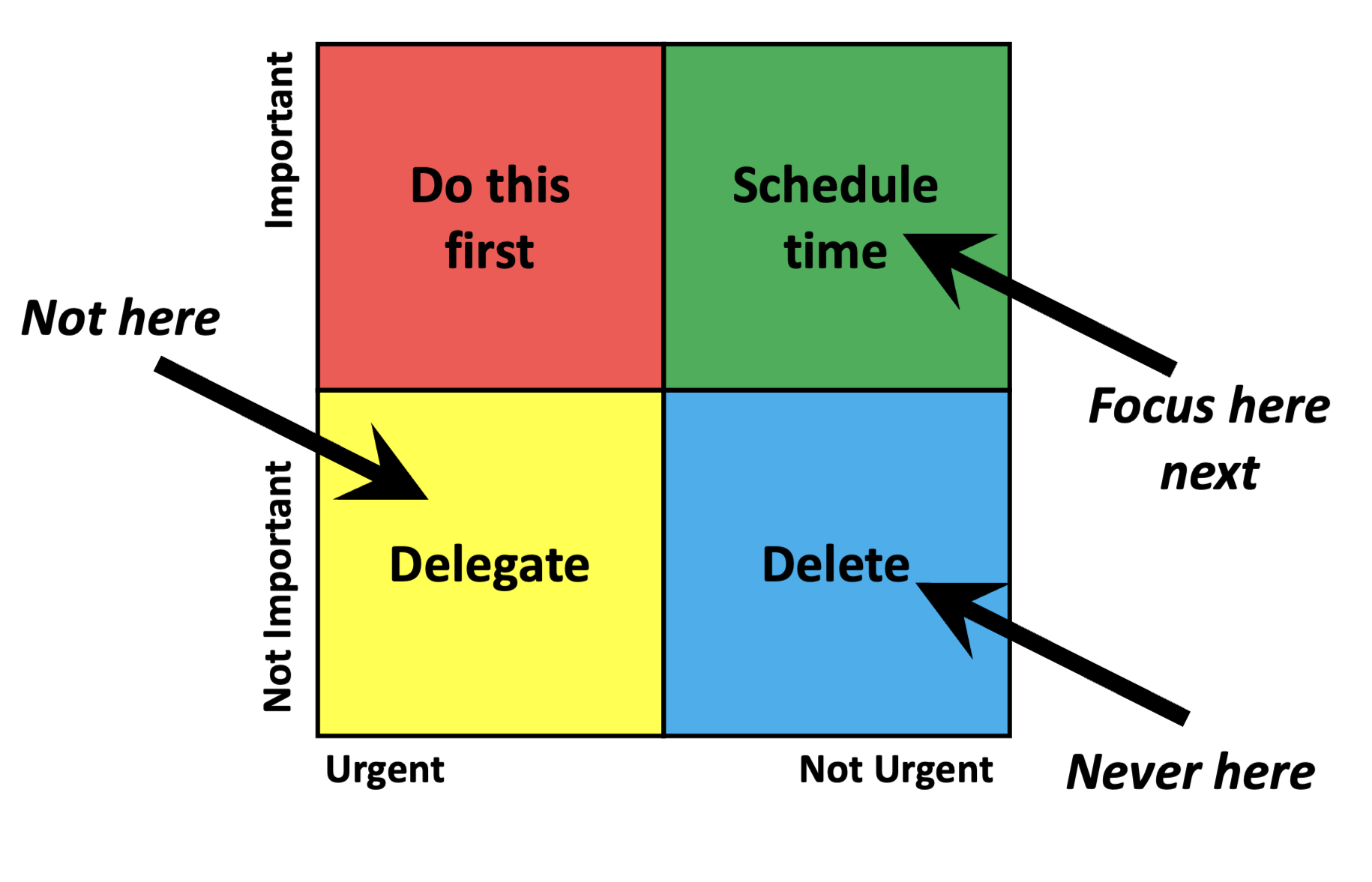
Instead of powering through another item on a long ToDo list, stop, breathe, and reflect on that list. The Eisenhower matrix is a classic approach to categorize work based on urgency and importance.
If it’s urgent and important, of course you do it first. Many professionals then get pulled into the urgent, not important lower left quadrant because being busy feels good. But that’s not productive.
A better option is the important, not urgent upper right quadrant.
What if you booked time for essential, growth-oriented, and purposeful work instead? You could focus on setting strategic direction, building relationships and growing skills. What impact would that create?
If you’re caught in too busy and long for meaningful impact, contact me and see if a coaching conversation can create that shift.
#toobusy #eisenhowermatrix #coaching




https://intercom.help/best-betting/en/articles/18249325-kod-promocyjny-mostbet-2026-maxbono-125-250-spinow
https://intercom.help/best-betting/en/articles/18248331-code-promo-1win-cote-d-ivoire-vip500max-bonus-500
https://www.sammyboy.com/members/advantagebet27.218039/#about
https://intercom.help/best-betting/en/articles/18249756-mostbet-promocode-bei-registrierung-maxbono-bonus-400
https://intercom.help/sportbet-c494ad7378f2/en/articles/18537542-codigo-de-deposito-1xbet-2026-paxpan-bono-100-100
https://intercom.help/best-betting/en/articles/18447338-1xbet-promo-code-cameroon-2026-1x200era-currency-review
https://intercom.help/best-betting/en/articles/18233032-betwinner-бЂ™бЂјбЂ”-бЂ™бЂ¬-бЂ•бЂ›бЂбЂЇбЂ™бЂбЂЇбЂЂбЂЇбЂ’-2026-qwerty777-100
https://intercom.help/best-betting/en/articles/18243624-1xslots-promo-code-club777-450-30-libreng-spins
https://intercom.help/best-betting/en/articles/18450041-code-promo-1xbet-pakistan-2026-1x200era-casino-150-spin-guide
https://auto-market66.ru/
https://intercom.help/best-betting/en/articles/18233032-betwinner-бЂ™бЂјбЂ”-бЂ™бЂ¬-бЂ•бЂ›бЂбЂЇбЂ™бЂбЂЇбЂЂбЂЇбЂ’-2026-qwerty777-100
https://intercom.help/best-betting/en/articles/18249092-winwin-gambia-promo-kode-bro200-100
https://intercom.help/best-betting/en/articles/17756123-melbet-promo-code-nigeria-game888-joint-or-alternative
Мастерская по ремонту https://yalina.by одежды и обуви в Минске – Ялина
https://auto-market66.ru/
I used to treat every partner offer the same way and wondered why my numbers never lined up with the projections. Then I started splitting them into two groups: deals with clear, published conditions and deals where you find out the rules after the fact. The difference is night and day for planning. If you are weighing a new program against your current one, compare the payout schedule, the commission basis, and the minimum threshold side by side before you send a single visitor. A written profile of the terms, such as the one at https://aspinwallmarina.com/cases/depot/melbet-partners-affiliate-program-profile/, gives you something concrete to hold against the sales pitch. I keep a short checklist and fill it in for each program, which takes ten minutes and has saved me from two bad signups already. The work is boring, but it is the cheapest insurance in this business.
You run a two-person travel blog, and your partner keeps asking which affiliate program actually fits your traffic. A solo site juggling hotel links, flight widgets and tour banners needs something different from a content team split across regions, and the trade-offs shift once more when a manager has to approve every placement. Reading a TravelPayouts affiliate network review before you commit saves you from building a link stack that only suits one kind of publisher. Small outfits care about setup time and payout thresholds, while larger teams worry about reporting per brand and who owns each campaign. The same network can serve both, but the tools you lean on differ: a single blogger wants quick copy-paste widgets, a bigger operation wants dashboards that separate traffic sources. Map your team size to the features you need first, then decide which tools deserve your attention and which are noise for your situation.
Two questions decide most affiliate decisions: will I get approved, and when does the money land. This page answers both for one specific program, and the order in which it presents them is useful. First it covers the application and what the reviewer found about getting through it, then it moves to how and when payouts are handled. That sequence mirrors how you should evaluate any program: confirm you can join, then confirm you will actually be paid on a schedule that works for you. The review stays concrete and avoids hype, which makes it a reasonable reference to keep beside your notes while you compare alternatives. You can find the full page at https://etnextras.com/picks/shortlist/edugram-guide/ and use it as a checklist against the terms of other programs you are considering, since the same two questions apply everywhere.
Bookmark this page before the next enquiry lands in your inbox. During a normal working day you rarely need the whole manual, just a quick confirmation of which category fits, what to include, and how the reply will be tracked. Keeping a short reference open means you route a question correctly the first time instead of forwarding it twice and hoping. The categories are short enough to scan in under a minute, and the ownership notes tell you who to chase if a reply stalls. That is faster than searching old emails for the last time someone solved the same problem. Use it as a checklist: pick the category, attach the relevant details, note the expected path, send. Full reference at https://nwgacu.org/q/askdesk/ so you can keep it beside your ticket queue.
Проверил на себе совет держать на виртуальной карте небольшую сумму перед привязкой.
У меня на ней был ноль, из-за чего сервис
дважды не мог провести тестовое списание —
закинул сто рублей, и всё прошло с первого раза.
https://mediawiki1334.00web.net/index.php/User:SpencerShipp